Buy sex.de.com ?
We are moving the project
sex.de.com .
Are you interested in purchasing the domain
sex.de.com ?
domain@kv-gmbh.de · 0541-91531010
Buy sex.de.com ?
What are the differences between covalent bonds, metallic bonds, and ionic bonds?
Covalent bonds are formed when two atoms share electrons, resulting in a strong bond between the atoms. Metallic bonds occur between metal atoms, where the electrons are delocalized and free to move throughout the structure, creating a strong bond. Ionic bonds are formed between a metal and a nonmetal, where one atom transfers electrons to the other, resulting in the formation of positively and negatively charged ions that are attracted to each other. Overall, covalent bonds involve electron sharing, metallic bonds involve electron delocalization, and ionic bonds involve electron transfer. **
Do CO bonds form with other CO bonds?
No, CO bonds do not typically form with other CO bonds. Carbon monoxide (CO) is a stable molecule with a triple bond between the carbon and oxygen atoms. This triple bond is strong and does not readily form additional bonds with other CO molecules. Instead, CO molecules tend to interact with other types of molecules through various types of chemical reactions. **
Similar search terms for Bonds
Top-Angebote
Products related to Bonds:
-
Matrix Instacure Build-A-Bond Mighty Bonds Full Routine PackYou deserve the full package! So, what are you waiting for? Stock up and save on this Mega Pack from Matrix, including: Instacure Build-A-Bond Mighty Bonds Shampoo 300ml, Conditioner 300ml, Instant Revival Liquid Mask 250ml, Super Sealing Leave-In Balm 75ml, Anti Breakage Leave-In 150ml. Healthy hair starts from within, and all of these Matrix Instacure Build-A-Bond Might Bond products heal your locks from the inside out! All five products are infused with citric acid, which penetrates deep into the hair fiber to strengthen and reinforce damaged hair strands from within. Ingredients: Shampoo: aqua / water / eau, decyl glucoside, sodium cocoyl isethionate, cocamidopropyl betaine, citric acid, sodium hydroxide, panthenol, parfum / fragrance, glycerin, dimethicone, peg-150 distearate, ppg-5-ceteth-20, sodium benzoate, sodium chloride, peg-55 propylene glycol oleate, propylene glycol, carbomer, limonene, coco-caprylate/caprate, polyquaternium-67, salicylic acid, amodimethicone, sodium phytate, glycol distearate, squalane, coco-betaine, linalool, acrylates/beheneth-25 methacrylate copolymer, citronellol, trideceth-6, benzyl alcohol, alcohol, cetrimonium chloride, ci 17200 / red 33 Conditioner: aqua / water / eau, cetearyl alcohol, propylene glycol, behentrimonium chloride, glycerin, cetyl esters, dimethicone, peg/ppg-4/12 dimethicone, amodimethicone, parfum / fragrance, isopropyl alcohol, dicetyldimonium chloride, citric acid, phenoxyethanol, limonene, isopropyl myristate, hydroxypropyl guar, squalane, linalool, trideceth-10, coco-betaine, citronellol, cetrimonium chloride, peg-100 stearate, steareth-6, sodium chloride, benzyl alcohol, trideceth-3, acetic acid, trisodium hedta, pentaerythrityl tetra-di-t-butyl hydroxyhydrocinnamate, ci 17200 / red 33 Mask: aqua / water / eau, cetearyl alcohol, behentrimonium chloride, dimethicone, isopropyl alcohol, amodimethicone, sodium citrate, glycerin, citric acid, c15-19 alkane, dicetyldimonium chloride, parfum / fragrance, aminopropyl dimethicone, phenoxyethanol, cetyl esters, hydroxypropyl guar, limonene, squalane, trideceth-6, linalool, dilauryl thiodipropionate, cetrimonium chloride, citronellol, benzyl alcohol, trisodium hedta, ci 17200 / red 33 Leave-In Balm: aqua / water / eau, dimethicone, cetearyl alcohol, amodimethicone, phenoxyethanol, polyquaternium-37, dimethiconol, trideceth-5, propylene glycol dicaprylate/dicaprate, steareth-20, cetyl hydroxyethylcellulose, parfum / fragrance, glycerin, citric acid, limonene, ppg-1 trideceth-6, trideceth-10, squalane, sodium hydroxide, linalool, chlorhexidine digluconate, acrylates/stearyl methacrylate copolymer, sorbitan oleate, acetic acid, citronellol, hydrated silica, silica dimethyl silylate, disodium phosphate, benzyl alcohol, sodium phosphate, edta, ci 17200 / red 33 Anti Breakage Leave-In: aqua / water / eau, dimethicone, cetearyl alcohol, amodimethicone, phenoxyethanol, polyquaternium-37, dimethiconol, trideceth-5, propylene glycol dicaprylate/dicaprate,...70,48 £*Shipping: 0,00 £Secure redirect to the provider
-
Matrix Instacure Build-A-Bond Mighty Bonds Shampoo 300ml & Instacure BStock up and save with this Matrix Instacure Build-A-Bond Mighty Bonds Shampoo 300ml & Instacure Build-A-Bond Mighty Care Conditioner 300ml Duo! Healthy hair starts from within, and this Matrix Instacure Build-A-Bond Mighty Bonds Shampoo and Conditioner gets straight to work to repair your hair. The luxuriously textured shampoo forms a rich lather and gets to work immediately on mega damaged hair and the luxuriously creamy conditioner gets straight to work with key ingredient Squalane, which works on the hairs surface to soften and smooth each strand for a silky finish! Both are infused with citric acid, this conditioner penetrates deep into the hair fiber to strengthen and reinforce damaged hair strands from within. Ingredients: Shampoo: aqua / water / eau, decyl glucoside, sodium cocoyl isethionate, cocamidopropyl betaine, citric acid, sodium hydroxide, panthenol, parfum / fragrance, glycerin, dimethicone, peg-150 distearate, ppg-5-ceteth-20, sodium benzoate, sodium chloride, peg-55 propylene glycol oleate, propylene glycol, carbomer, limonene, coco-caprylate/caprate, polyquaternium-67, salicylic acid, amodimethicone, sodium phytate, glycol distearate, squalane, coco-betaine, linalool, acrylates/beheneth-25 methacrylate copolymer, citronellol, trideceth-6, benzyl alcohol, alcohol, cetrimonium chloride, ci 17200 / red 33 Conditioner: aqua / water / eau, cetearyl alcohol, propylene glycol, behentrimonium chloride, glycerin, cetyl esters, dimethicone, peg/ppg-4/12 dimethicone, amodimethicone, parfum / fragrance, isopropyl alcohol, dicetyldimonium chloride, citric acid, phenoxyethanol, limonene, isopropyl myristate, hydroxypropyl guar, squalane, linalool, trideceth-10, coco-betaine, citronellol, cetrimonium chloride, peg-100 stearate, steareth-6, sodium chloride, benzyl alcohol, trideceth-3, acetic acid, trisodium hedta, pentaerythrityl tetra-di-t-butyl hydroxyhydrocinnamate, ci 17200 / red 3324,16 £*Shipping: 0,00 £Secure redirect to the provider
-
Inspired Finds Eternal Bonds Personalized Acrylic Photo Frame & Custom Couple Plaque Gift warm LightCapture Your Timeless Connection. Turn your most meaningful moments into a lasting keepsake with this elegant personalized acrylic photo frame. Designed specifically for couples who value memories that matter, this sleek, transparent display piece...110,99 $*Shipping: 0,00 $Secure redirect to the provider
-
Hodder & Stoughton Mating in Captivity by Esther Perel - Paperback Relationship Psychology Book - Desire, Intimacy & Long-Term LoveMating in Captivity is Esther Perel's exploration of desire within long-term relationships. Drawing on decades as a couples therapist, Perel asks why security and passion often pull against each other, and what couples can do to keep eroticism alive once domestic routine sets in. This thought-provoking read blends clinical case studies with accessible prose, making it a staple recommendation for therapists and relationship counsellors. The book examines modern relationships, which promise lifelong companionship, deep intimacy, and lasting erotic connection, but often work against these goals. Esther Perel draws on over three decades of clinical practice to explore the complexities of desire and relationships. Published by Hodder & Stoughton, this paperback is a must-read for anyone in a committed relationship.3,99 £*Shipping: 2,99 £Secure redirect to the provider




-
Why are intermolecular bonds weaker than electron pair bonds?
Intermolecular bonds are weaker than electron pair bonds because they involve interactions between molecules rather than within a single molecule. In intermolecular bonds, the attractive forces between molecules are generally weaker than the covalent bonds that hold atoms together within a molecule. Additionally, intermolecular bonds are typically temporary and can be easily broken, whereas electron pair bonds are strong and stable. Overall, the weaker nature of intermolecular bonds allows molecules to move and interact with each other more freely. **
-
Why are intermolecular bonds generally weaker than covalent bonds?
Intermolecular bonds are generally weaker than covalent bonds because they involve interactions between molecules rather than within a single molecule. Covalent bonds involve the sharing of electrons between atoms, creating strong bonds within a molecule. In contrast, intermolecular bonds, such as hydrogen bonds or van der Waals forces, are weaker because they are based on temporary interactions between molecules, which can be easily broken. Additionally, intermolecular bonds are influenced by factors such as distance and orientation, further contributing to their weaker nature compared to covalent bonds. **
-
Why are intermolecular bonds typically weaker than covalent bonds?
Intermolecular bonds are typically weaker than covalent bonds because they involve interactions between molecules rather than within a single molecule. In intermolecular bonds, the attractive forces between molecules, such as van der Waals forces or hydrogen bonding, are weaker than the strong sharing of electrons in covalent bonds. Additionally, intermolecular bonds are more easily broken or disrupted by changes in temperature or pressure, leading to lower bond energies compared to covalent bonds. **
-
Why are triple bonds shorter than single or double bonds?
Triple bonds are shorter than single or double bonds because they involve the sharing of more electron pairs between the bonded atoms. In a triple bond, there are three pairs of electrons being shared, leading to a stronger attraction between the atoms and a shorter bond length. This increased electron density and stronger attraction results in a shorter distance between the nuclei of the bonded atoms, making triple bonds shorter than single or double bonds. **


What is the difference between ionic bonds and covalent bonds?
Ionic bonds form between two atoms when one atom transfers one or more electrons to another atom. This results in the formation of positively charged ions (cations) and negatively charged ions (anions) that are attracted to each other. Covalent bonds, on the other hand, form when two atoms share one or more pairs of electrons. This sharing of electrons creates a strong bond between the atoms. In summary, ionic bonds involve the transfer of electrons, while covalent bonds involve the sharing of electrons. **
What is the difference between primary bonds and secondary bonds?
Primary bonds are strong chemical bonds that hold together the atoms within a molecule, such as covalent bonds and ionic bonds. These bonds involve the sharing or transfer of electrons between atoms, resulting in a stable molecular structure. On the other hand, secondary bonds are weaker intermolecular forces that hold molecules together, such as hydrogen bonds, van der Waals forces, and dipole-dipole interactions. These bonds are responsible for the physical properties of substances, such as melting and boiling points, and are easily broken and reformed. **
Top-Angebote
Products related to Bonds:
-
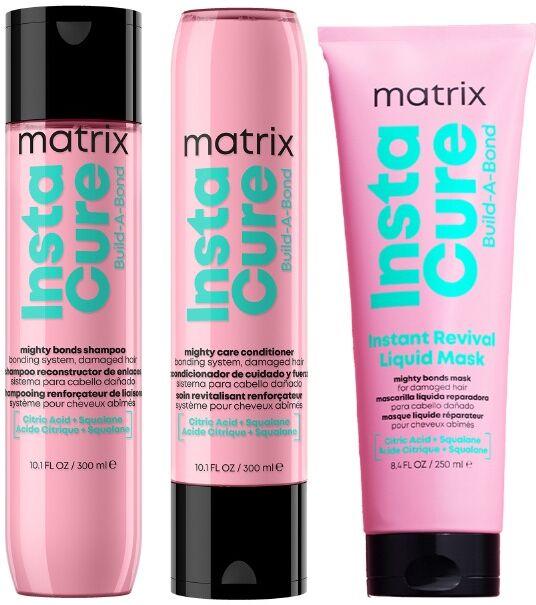
Matrix Instacure Build-A-Bond Mighty Bonds PackStock up and save with this Matrix Instacure Build-A-Bond Mighty Bonds Shampoo 300ml, Instacure Build-A-Bond Mighty Care Conditioner 300ml and Instacure Build-A-Bond Instant Revival Liquid Mask 250ml Pack! Healthy hair starts from within, and this Matrix Instacure Build-A-Bond Mighty Bonds Shampoo, Conditioner and mask get straight to work. The luxuriously textured shampoo forms a rich lather and gets to work immediately on mega damaged hair and the luxuriously creamy conditioner gets straight to work with key ingredient Squalane, which works on the hairs surface to soften and smooth each strand for a silky finish! The instant revival mask has an innovative liquid texture and repairs and strengthens hair from within. Suitable for color-treated and highlighted hair. All are infused with citric acid, this conditioner penetrates deep into the hair fiber to strengthen and reinforce damaged hair strands from within. Ingredients: Shampoo: aqua / water / eau, decyl glucoside, sodium cocoyl isethionate, cocamidopropyl betaine, citric acid, sodium hydroxide, panthenol, parfum / fragrance, glycerin, dimethicone, peg-150 distearate, ppg-5-ceteth-20, sodium benzoate, sodium chloride, peg-55 propylene glycol oleate, propylene glycol, carbomer, limonene, coco-caprylate/caprate, polyquaternium-67, salicylic acid, amodimethicone, sodium phytate, glycol distearate, squalane, coco-betaine, linalool, acrylates/beheneth-25 methacrylate copolymer, citronellol, trideceth-6, benzyl alcohol, alcohol, cetrimonium chloride, ci 17200 / red 33 Conditioner: aqua / water / eau, cetearyl alcohol, propylene glycol, behentrimonium chloride, glycerin, cetyl esters, dimethicone, peg/ppg-4/12 dimethicone, amodimethicone, parfum / fragrance, isopropyl alcohol, dicetyldimonium chloride, citric acid, phenoxyethanol, limonene, isopropyl myristate, hydroxypropyl guar, squalane, linalool, trideceth-10, coco-betaine, citronellol, cetrimonium chloride, peg-100 stearate, steareth-6, sodium chloride, benzyl alcohol, trideceth-3, acetic acid, trisodium hedta, pentaerythrityl tetra-di-t-butyl hydroxyhydrocinnamate, ci 17200 / red 33 Mask: aqua / water / eau, cetearyl alcohol, behentrimonium chloride, dimethicone, isopropyl alcohol, amodimethicone, sodium citrate, glycerin, citric acid, c15-19 alkane, dicetyldimonium chloride, parfum / fragrance, aminopropyl dimethicone, phenoxyethanol, cetyl esters, hydroxypropyl guar, limonene, squalane, trideceth-6, linalool, dilauryl thiodipropionate, cetrimonium chloride, citronellol, benzyl alcohol, trisodium hedta, ci 17200 / red 3339,60 £*Shipping: 0,00 £Secure redirect to the provider
-
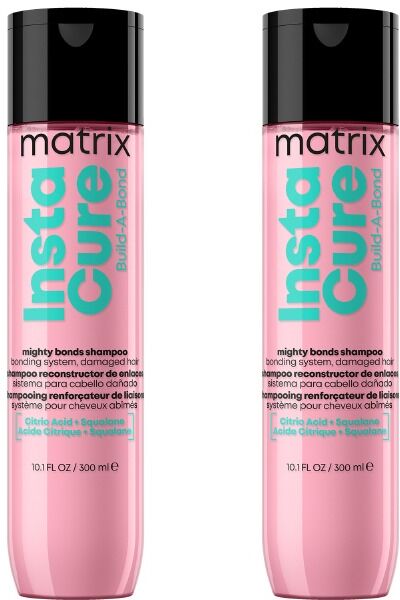
Matrix Instacure Build-A-Bond Mighty Bonds Shampoo 300ml DoubleStock up and save on professional results at home with this double Matrix Instacure Build-A-Bond Mighty Bonds Shampoo! (Includes 2 x 300ml Shampoo) Healthy hair starts from within, and this Matrix Instacure Build-A-Bond Mighty Bonds Shampoo gets straight to work This luxuriously textured shampoo forms a rich lather and gets to work immediately on mega damaged hair. Key ingredients include Citric acid, which penetrates deep into the hair fiber to strengthen and repair your hair from within. It's also infused with Squalane, which works on the hair's surface to soften and smooth every strand! Ingredients: AQUA / WATER / EAU, DECYL GLUCOSIDE, SODIUM COCOYL ISETHIONATE, COCAMIDOPROPYL BETAINE, CITRIC ACID, SODIUM HYDROXIDE, PANTHENOL, PARFUM / FRAGRANCE, GLYCERIN, DIMETHICONE, PEG-150 DISTEARATE, PPG-5-CETETH-20, SODIUM BENZOATE, SODIUM CHLORIDE, PEG-55 PROPYLENE GLYCOL OLEATE, PROPYLENE GLYCOL, CARBOMER, LIMONENE, COCO-CAPRYLATE/CAPRATE, POLYQUATERNIUM-67, SALICYLIC ACID, AMODIMETHICONE, SODIUM PHYTATE, GLYCOL DISTEARATE, SQUALANE, COCO-BETAINE, LINALOOL, ACRYLATES/BEHENETH-25 METHACRYLATE COPOLYMER, CITRONELLOL, TRIDECETH-6, BENZYL ALCOHOL, ALCOHOL, CETRIMONIUM CHLORIDE, CI 17200 / RED 3324,16 £*Shipping: 0,00 £Secure redirect to the provider
-
Matrix Instacure Build-A-Bond Mighty Bonds Full Routine PackYou deserve the full package! So, what are you waiting for? Stock up and save on this Mega Pack from Matrix, including: Instacure Build-A-Bond Mighty Bonds Shampoo 300ml, Conditioner 300ml, Instant Revival Liquid Mask 250ml, Super Sealing Leave-In Balm 75ml, Anti Breakage Leave-In 150ml. Healthy hair starts from within, and all of these Matrix Instacure Build-A-Bond Might Bond products heal your locks from the inside out! All five products are infused with citric acid, which penetrates deep into the hair fiber to strengthen and reinforce damaged hair strands from within. Ingredients: Shampoo: aqua / water / eau, decyl glucoside, sodium cocoyl isethionate, cocamidopropyl betaine, citric acid, sodium hydroxide, panthenol, parfum / fragrance, glycerin, dimethicone, peg-150 distearate, ppg-5-ceteth-20, sodium benzoate, sodium chloride, peg-55 propylene glycol oleate, propylene glycol, carbomer, limonene, coco-caprylate/caprate, polyquaternium-67, salicylic acid, amodimethicone, sodium phytate, glycol distearate, squalane, coco-betaine, linalool, acrylates/beheneth-25 methacrylate copolymer, citronellol, trideceth-6, benzyl alcohol, alcohol, cetrimonium chloride, ci 17200 / red 33 Conditioner: aqua / water / eau, cetearyl alcohol, propylene glycol, behentrimonium chloride, glycerin, cetyl esters, dimethicone, peg/ppg-4/12 dimethicone, amodimethicone, parfum / fragrance, isopropyl alcohol, dicetyldimonium chloride, citric acid, phenoxyethanol, limonene, isopropyl myristate, hydroxypropyl guar, squalane, linalool, trideceth-10, coco-betaine, citronellol, cetrimonium chloride, peg-100 stearate, steareth-6, sodium chloride, benzyl alcohol, trideceth-3, acetic acid, trisodium hedta, pentaerythrityl tetra-di-t-butyl hydroxyhydrocinnamate, ci 17200 / red 33 Mask: aqua / water / eau, cetearyl alcohol, behentrimonium chloride, dimethicone, isopropyl alcohol, amodimethicone, sodium citrate, glycerin, citric acid, c15-19 alkane, dicetyldimonium chloride, parfum / fragrance, aminopropyl dimethicone, phenoxyethanol, cetyl esters, hydroxypropyl guar, limonene, squalane, trideceth-6, linalool, dilauryl thiodipropionate, cetrimonium chloride, citronellol, benzyl alcohol, trisodium hedta, ci 17200 / red 33 Leave-In Balm: aqua / water / eau, dimethicone, cetearyl alcohol, amodimethicone, phenoxyethanol, polyquaternium-37, dimethiconol, trideceth-5, propylene glycol dicaprylate/dicaprate, steareth-20, cetyl hydroxyethylcellulose, parfum / fragrance, glycerin, citric acid, limonene, ppg-1 trideceth-6, trideceth-10, squalane, sodium hydroxide, linalool, chlorhexidine digluconate, acrylates/stearyl methacrylate copolymer, sorbitan oleate, acetic acid, citronellol, hydrated silica, silica dimethyl silylate, disodium phosphate, benzyl alcohol, sodium phosphate, edta, ci 17200 / red 33 Anti Breakage Leave-In: aqua / water / eau, dimethicone, cetearyl alcohol, amodimethicone, phenoxyethanol, polyquaternium-37, dimethiconol, trideceth-5, propylene glycol dicaprylate/dicaprate,...70,48 £*Shipping: 0,00 £Secure redirect to the provider
-
Matrix Instacure Build-A-Bond Mighty Bonds Shampoo 300ml & Instacure BStock up and save with this Matrix Instacure Build-A-Bond Mighty Bonds Shampoo 300ml & Instacure Build-A-Bond Mighty Care Conditioner 300ml Duo! Healthy hair starts from within, and this Matrix Instacure Build-A-Bond Mighty Bonds Shampoo and Conditioner gets straight to work to repair your hair. The luxuriously textured shampoo forms a rich lather and gets to work immediately on mega damaged hair and the luxuriously creamy conditioner gets straight to work with key ingredient Squalane, which works on the hairs surface to soften and smooth each strand for a silky finish! Both are infused with citric acid, this conditioner penetrates deep into the hair fiber to strengthen and reinforce damaged hair strands from within. Ingredients: Shampoo: aqua / water / eau, decyl glucoside, sodium cocoyl isethionate, cocamidopropyl betaine, citric acid, sodium hydroxide, panthenol, parfum / fragrance, glycerin, dimethicone, peg-150 distearate, ppg-5-ceteth-20, sodium benzoate, sodium chloride, peg-55 propylene glycol oleate, propylene glycol, carbomer, limonene, coco-caprylate/caprate, polyquaternium-67, salicylic acid, amodimethicone, sodium phytate, glycol distearate, squalane, coco-betaine, linalool, acrylates/beheneth-25 methacrylate copolymer, citronellol, trideceth-6, benzyl alcohol, alcohol, cetrimonium chloride, ci 17200 / red 33 Conditioner: aqua / water / eau, cetearyl alcohol, propylene glycol, behentrimonium chloride, glycerin, cetyl esters, dimethicone, peg/ppg-4/12 dimethicone, amodimethicone, parfum / fragrance, isopropyl alcohol, dicetyldimonium chloride, citric acid, phenoxyethanol, limonene, isopropyl myristate, hydroxypropyl guar, squalane, linalool, trideceth-10, coco-betaine, citronellol, cetrimonium chloride, peg-100 stearate, steareth-6, sodium chloride, benzyl alcohol, trideceth-3, acetic acid, trisodium hedta, pentaerythrityl tetra-di-t-butyl hydroxyhydrocinnamate, ci 17200 / red 3324,16 £*Shipping: 0,00 £Secure redirect to the provider
-
What are the differences between covalent bonds, metallic bonds, and ionic bonds?
Covalent bonds are formed when two atoms share electrons, resulting in a strong bond between the atoms. Metallic bonds occur between metal atoms, where the electrons are delocalized and free to move throughout the structure, creating a strong bond. Ionic bonds are formed between a metal and a nonmetal, where one atom transfers electrons to the other, resulting in the formation of positively and negatively charged ions that are attracted to each other. Overall, covalent bonds involve electron sharing, metallic bonds involve electron delocalization, and ionic bonds involve electron transfer. **
-
Do CO bonds form with other CO bonds?
No, CO bonds do not typically form with other CO bonds. Carbon monoxide (CO) is a stable molecule with a triple bond between the carbon and oxygen atoms. This triple bond is strong and does not readily form additional bonds with other CO molecules. Instead, CO molecules tend to interact with other types of molecules through various types of chemical reactions. **
-
Why are intermolecular bonds weaker than electron pair bonds?
Intermolecular bonds are weaker than electron pair bonds because they involve interactions between molecules rather than within a single molecule. In intermolecular bonds, the attractive forces between molecules are generally weaker than the covalent bonds that hold atoms together within a molecule. Additionally, intermolecular bonds are typically temporary and can be easily broken, whereas electron pair bonds are strong and stable. Overall, the weaker nature of intermolecular bonds allows molecules to move and interact with each other more freely. **
-
Why are intermolecular bonds generally weaker than covalent bonds?
Intermolecular bonds are generally weaker than covalent bonds because they involve interactions between molecules rather than within a single molecule. Covalent bonds involve the sharing of electrons between atoms, creating strong bonds within a molecule. In contrast, intermolecular bonds, such as hydrogen bonds or van der Waals forces, are weaker because they are based on temporary interactions between molecules, which can be easily broken. Additionally, intermolecular bonds are influenced by factors such as distance and orientation, further contributing to their weaker nature compared to covalent bonds. **
Similar search terms for Bonds
-
Inspired Finds Eternal Bonds Personalized Acrylic Photo Frame & Custom Couple Plaque Gift warm LightCapture Your Timeless Connection. Turn your most meaningful moments into a lasting keepsake with this elegant personalized acrylic photo frame. Designed specifically for couples who value memories that matter, this sleek, transparent display piece...110,99 $*Shipping: 0,00 $Secure redirect to the provider
-
Hodder & Stoughton Mating in Captivity by Esther Perel - Paperback Relationship Psychology Book - Desire, Intimacy & Long-Term LoveMating in Captivity is Esther Perel's exploration of desire within long-term relationships. Drawing on decades as a couples therapist, Perel asks why security and passion often pull against each other, and what couples can do to keep eroticism alive once domestic routine sets in. This thought-provoking read blends clinical case studies with accessible prose, making it a staple recommendation for therapists and relationship counsellors. The book examines modern relationships, which promise lifelong companionship, deep intimacy, and lasting erotic connection, but often work against these goals. Esther Perel draws on over three decades of clinical practice to explore the complexities of desire and relationships. Published by Hodder & Stoughton, this paperback is a must-read for anyone in a committed relationship.3,99 £*Shipping: 2,99 £Secure redirect to the provider
-
Dunhill Desire Red Eau de Toilette for Men 100 mlHealth and Beauty Colonies Dunhill Desire Red Eau de Toilette for Men 100 ml It is a very distinctive woody fruity scent for men. Extremely rewarding to wear , a stunning cologne that is one of a kind. For self- assured men who don't mind being noticed for the wonderful way they smell. -Top notes: bergamot, green lemon, neroli and crisp apple. -Heart notes: rich teak wood, rose petals and patchouli. -Base notes: creamy vanilla, musk and labdanum.27,82 £*Shipping: 3,99 £Secure redirect to the provider
-
Why are intermolecular bonds typically weaker than covalent bonds?
Intermolecular bonds are typically weaker than covalent bonds because they involve interactions between molecules rather than within a single molecule. In intermolecular bonds, the attractive forces between molecules, such as van der Waals forces or hydrogen bonding, are weaker than the strong sharing of electrons in covalent bonds. Additionally, intermolecular bonds are more easily broken or disrupted by changes in temperature or pressure, leading to lower bond energies compared to covalent bonds. **
-
Why are triple bonds shorter than single or double bonds?
Triple bonds are shorter than single or double bonds because they involve the sharing of more electron pairs between the bonded atoms. In a triple bond, there are three pairs of electrons being shared, leading to a stronger attraction between the atoms and a shorter bond length. This increased electron density and stronger attraction results in a shorter distance between the nuclei of the bonded atoms, making triple bonds shorter than single or double bonds. **
-
What is the difference between ionic bonds and covalent bonds?
Ionic bonds form between two atoms when one atom transfers one or more electrons to another atom. This results in the formation of positively charged ions (cations) and negatively charged ions (anions) that are attracted to each other. Covalent bonds, on the other hand, form when two atoms share one or more pairs of electrons. This sharing of electrons creates a strong bond between the atoms. In summary, ionic bonds involve the transfer of electrons, while covalent bonds involve the sharing of electrons. **
-
What is the difference between primary bonds and secondary bonds?
Primary bonds are strong chemical bonds that hold together the atoms within a molecule, such as covalent bonds and ionic bonds. These bonds involve the sharing or transfer of electrons between atoms, resulting in a stable molecular structure. On the other hand, secondary bonds are weaker intermolecular forces that hold molecules together, such as hydrogen bonds, van der Waals forces, and dipole-dipole interactions. These bonds are responsible for the physical properties of substances, such as melting and boiling points, and are easily broken and reformed. **
* All prices are inclusive of VAT and, if applicable, plus shipping costs. The offer information is based on the details provided by the respective shop and is updated through automated processes. Real-time updates do not occur, so deviations can occur in individual cases. ** Note: Parts of this content were created by AI.